A Family Conversation Worth Having: Getting Everyone Ready Before a Pet Goes Missing
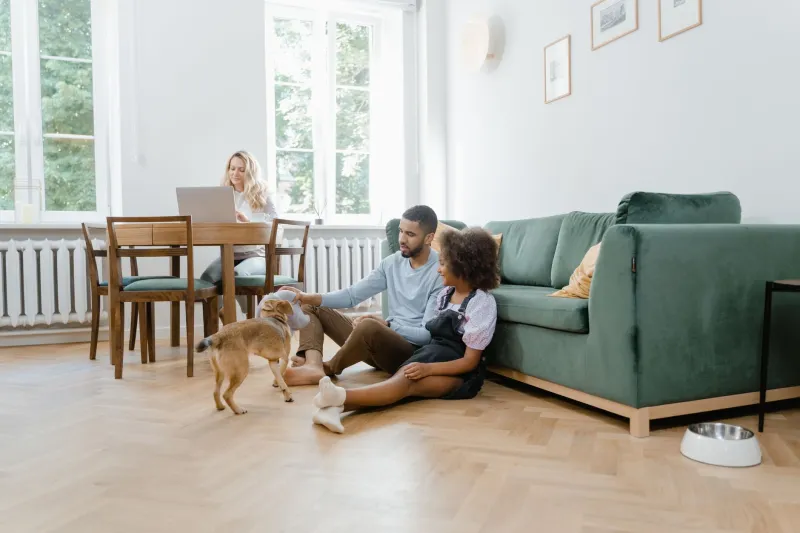
Nobody sits down at the dinner table and says, "Hey, let's talk about what happens if Biscuit never comes home." It's uncomfortable. It feels like inviting bad luck. And honestly, most of us would rather just not go there.
But here's the thing: when a pet does go missing — and in Alberta, it happens more often than most owners expect — the families who handle it best are the ones who've already talked about it. Not because they had some crystal ball, but because they treated pet safety the same way they treat a fire drill. You practise before the emergency, not during it.
This article is about how to have that conversation. With your kids. With your elderly parents. With whoever shares your home and loves your animals.
Why This Is a Family Issue, Not Just an Owner's Problem
There's usually one person in every household who carries the full weight of pet ownership — the feeding schedules, the vet appointments, the microchip registration. And when a pet goes missing, that person often scrambles alone while everyone else hovers anxiously in the background, unsure what to do.
That dynamic doesn't serve anyone well. Kids who aren't given a role feel helpless. Elderly relatives who aren't looped in feel left out — or worse, blamed if something happened on their watch. And the primary caregiver burns out fast.
Spreading the responsibility around isn't about adding to anyone's plate. It's about making sure that if something goes wrong, your whole household can function as a team instead of a collection of panicked individuals.
Talking to Kids: Age-Appropriate and Honest
Children are more resilient than we give them credit for, but they also fill silence with fear. If you don't give them information, they'll invent something worse.
For younger kids — roughly under eight — keep it simple and action-focused. "If Maple ever gets lost, here's what we do." Walk them through the steps: tell a grown-up right away, don't chase the pet alone, help put up posters. Give them a job that feels meaningful without putting adult pressure on small shoulders. Kids this age respond well to having a clear role. "You're in charge of checking the backyard" gives them ownership without overwhelm.
For older kids and teenagers, you can go deeper. Talk about why pets go missing — a gate left open, a loud noise on Canada Day fireworks, a collar that slipped. Teenagers especially benefit from understanding cause and effect. They're more likely to double-check latches and keep the dog leashed if they understand the actual risk rather than just being told "be careful."
The hardest part of any of these conversations is the worst-case scenario: what if the pet doesn't come home? What if they're hurt? You don't need to dwell there, but you shouldn't pretend it's impossible either. Acknowledging that outcome — briefly, honestly, and with reassurance that your family would grieve together and support each other — is healthier than treating it like something unspeakable.
Including Elderly Family Members
If you have a parent or grandparent living with you or helping care for your pet, they need to be part of the plan too. This matters for a couple of reasons.
First, older adults are often home during the day, which means they're frequently the ones who notice a pet is missing first. If they don't know what to do or who to call, precious recovery time gets lost. Make sure they have a short, written list of steps — not a ten-page document, just a simple card on the fridge. "If [pet name] is missing: 1. Call [your name]. 2. Do not leave the house to search alone. 3. Keep the back door closed."
Second, elderly relatives sometimes feel enormous guilt when a pet goes missing under their watch. Having a clear plan in advance takes that burden off them. It's not about blame — it's about making sure everyone knows exactly what to do so nobody freezes.
Designating a Pet Guardian: A Step Most Families Skip
Here's something almost nobody talks about: what happens to your pet if something happens to you?
If you're the primary caregiver and you're suddenly unavailable — through illness, an accident, or death — who takes the animal? In Alberta, pets are considered property under the law, which means without a specific plan, your pet could end up in a shelter or passed between relatives who aren't sure what to do.
Designating a pet guardian in your will is a straightforward step that most estate lawyers in Alberta can help you with. It doesn't have to be elaborate. You name a person, confirm they're willing to take the pet, and ideally leave some financial provision for the animal's ongoing care.
Have this conversation with the person you're thinking of before you write it into any legal documents. Not everyone wants or is able to take on a pet, and finding that out after the fact helps no one.
Building Emotional Resilience Into the Plan
Practical steps matter — but so does the emotional side of this. Pet loss, even temporary loss, hits hard. And for children especially, a missing pet is often their first real encounter with grief and uncertainty.
Building emotional resilience doesn't mean preparing your family to feel nothing. It means building the language and the habits that help people process hard feelings without shutting down.
Some families find it helpful to talk openly about how much the pet means to everyone, not just when something goes wrong but regularly. "Ranger is part of our family" is a statement that, when said often enough, actually helps kids process a loss when it comes. It validates the grief as real and proportionate.
It also helps to have a plan for what the family does together during a search. Assigning roles — one person updates the Alberta Lost Pet Locator listing, one person walks the neighbourhood, one person calls the local shelters — keeps everyone moving and gives the anxiety somewhere productive to go.
Make It a Habit, Not a One-Time Talk
One conversation isn't enough. Kids grow up. Elderly relatives' health changes. You move to a new neighbourhood with different risks. Your pet gets older and starts wandering.
Build a short annual check-in into your routine — maybe every spring when the weather turns and pets start spending more time outside. Review your plan, update your pet's ID photo, confirm the guardian is still willing and able, and make sure everyone still knows their role.
It doesn't need to be heavy. It can be fifteen minutes at the kitchen table. The point isn't to scare anyone. The point is that when something actually goes wrong, your family already knows what to do — and you've already told each other that you'll get through it together.
That's not pessimism. That's love with a plan behind it.