Pet Just Went Missing? Do These Things in the Next 24 Hours
When Panic Hits, Have a Plan
Your stomach drops. You call their name. Nothing. You check their usual spots, the backyard, the end of the driveway — and the reality starts to sink in. Your pet is gone.
For most Alberta families, this moment brings a wave of panic that makes it genuinely hard to think straight. And that's exactly why having a clear, step-by-step action plan ready before an emergency happens is so valuable. But even if you're reading this right now because your pet just went missing — take a breath. You can still do this.
Time is one of the most important factors in a successful recovery. Here's how to use the next 24 hours well.
The First Hour: Don't Just Search — Do This First
Do a quick, calm sweep of your immediate area
Before anything else, spend 10–15 minutes doing a focused sweep of your home and yard. Check under beds, inside closets, behind appliances — especially for cats, who are masters of finding impossible hiding spots when stressed. Look for any gaps in fencing or screens. Confirm your pet is genuinely gone before shifting into full response mode.
Grab a recent photo
You'll need this for everything that follows. The best photo is clear, recent, and shows your pet's face and any distinguishing markings. If you have multiple good photos — including ones that show size or unique features — gather those too.
Note the details while they're fresh
Write down (or type into your phone) the exact time and location you last saw your pet, what they were wearing (collar colour, harness, tags), and any relevant context — were they spooked by something? Did a gate get left open? These details matter when you're filing reports and describing your pet to others.
Hours 1–3: Start Making Calls and Posting
Contact local shelters immediately
In Alberta, your first calls should go to your local municipal animal shelter and any regional SPCA or humane society branches nearby. Don't just leave a voicemail — follow up with an email that includes your pet's photo and description. Ask how frequently they take in strays and how you can check back in. Many shelters allow you to register a lost pet report that staff can reference when new animals arrive.
If you're in Edmonton, the Edmonton Humane Society and Edmonton Animal Care and Control are your starting points. In Calgary, reach out to Calgary Animal Services and the Calgary Humane Society. For smaller communities, check with your municipality directly — many towns and counties have their own animal control services.
Call nearby vet clinics
A found pet is often brought to the nearest vet clinic, especially if the finder is concerned about the animal's health. Call clinics within a reasonable radius of where your pet was last seen and ask them to flag your pet's description in case someone comes in. Leave your contact number.
Post to Alberta Lost Pet Locator
Submit a lost pet alert through Alberta Lost Pet Locator as soon as possible. The sooner your pet's information is in the database and circulating through the community network, the wider your search radius becomes without you having to do everything yourself.
Hit social media — strategically
Create a clear, shareable post with your pet's photo, name, last known location, and your contact information. Post to:
- Local Facebook community groups (search your city or neighbourhood name + "lost pets," "community," or "buy nothing")
- Nextdoor, if you're active on it
- Reddit — Alberta-based subreddits like r/Edmonton or r/Calgary often have active communities who will share lost pet posts
- Instagram and TikTok with location tags if you're comfortable with those platforms
Keep your contact method consistent across posts — one phone number or email — so responses don't get scattered.
Hours 3–8: Get Physical Presence Out There
Make and post flyers
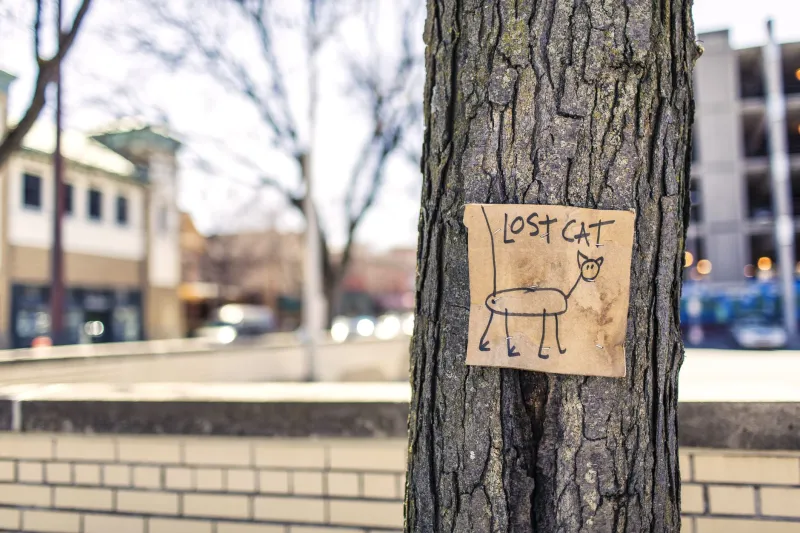
Old school still works. Create a simple flyer with a large, clear photo, your pet's name, last seen location, and your phone number. Use bold text and high contrast. Print enough to cover a meaningful radius — at minimum, a few blocks in every direction from where your pet was last seen.
Post them at:
- Telephone poles and community bulletin boards
- Local pet supply stores, vet clinics, and grooming shops
- Community centres, laundromats, and coffee shops
- Transit shelters if you're in an urban area
Always ask permission before posting on private property.
Walk the neighbourhood — and talk to people
Don't just walk and look. Knock on doors. Talk to neighbours, dog walkers, mail carriers, and delivery drivers. These are the people with eyes on the street at all hours. Leave a flyer with anyone who's willing to take one. Ask if they have doorbell cameras or security footage from around the time your pet went missing.
Revisit familiar spots at different times
Lost pets — especially cats — often hunker down close to home and move only at dawn and dusk. Dogs may circle back to familiar walking routes. Walk those paths during quieter hours and call your pet's name calmly. Bring a favourite toy or treats that have a strong smell.
Hours 8–24: Keep the Momentum Going
Follow up with shelters — again
Don't assume that because you called once, you're covered. Shelters take in animals throughout the day. Call back in the evening and again the following morning. Ask if you can come in person to look — sometimes animals are misidentified or not logged immediately.
Expand your digital reach
If you posted in a few groups, post in a few more. Ask friends and family to share your posts. The goal is to get your pet's image in front of as many eyes as possible across the region.
Check lost and found listings
Someone may have found your pet and posted about it without knowing how to reach you. Search Facebook Marketplace, Kijiji, and local community groups for "found dog" or "found cat" posts from the past 24 hours.
Don't give up at nightfall
It's tempting to assume you'll find them tomorrow. But the first night is critical — especially in Alberta's climate. If it's cold, your pet needs shelter. Set out a familiar-smelling item (your worn clothing, their bedding) near your home to help guide them back. Leave a door slightly ajar if it's safe to do so, or a porch light on.
A Quick Reference Checklist
Save this or screenshot it for emergencies:
- Confirm pet is missing — check all hiding spots
- Gather recent, clear photos
- Note last seen time, location, and context
- Call local animal shelter(s)
- Call nearby vet clinics
- Submit alert to Alberta Lost Pet Locator
- Post on local Facebook groups, Nextdoor, Reddit
- Print and distribute flyers
- Canvass neighbourhood, talk to neighbours
- Walk familiar routes at dawn and dusk
- Follow up with shelters (morning and evening)
- Search "found pet" listings on Kijiji and Facebook
- Leave scent items near home to guide pet back
You're Not Doing This Alone
The Alberta Lost Pet Locator community exists precisely for moments like this. Neighbours helping neighbours, shareable alerts, and a searchable database all work together to close the gap between a missing pet and a family waiting at the door.
Act fast, stay organized, and lean on the network around you. Most lost pets in Alberta are found — and the ones that come home fastest almost always had owners who moved quickly in those first critical hours.