Where Do Lost Pets Actually Turn Up? A Geographic Look at Pet Recovery Across Alberta
When a pet goes missing, most owners instinctively start close to home — knocking on neighbours' doors, walking the block, calling out a familiar name. That instinct isn't wrong. But it's also incomplete. Where your pet is most likely to end up depends heavily on where you live in Alberta, what the land around you looks like, and how your pet's natural tendencies interact with that environment.
Alberta is a remarkably diverse province. A lost dog in Lethbridge faces a completely different landscape than one who slips out of a backyard in St. Albert. A cat that darts out a door in Red Deer isn't navigating the same terrain as one that bolts in Canmore. Understanding those differences can make a real difference in how quickly — and whether — a pet comes home.
Calgary: Greenbelts, Pathways, and the Pull of the Bow
Calgary's extensive pathway system is one of the city's most beloved features. For a lost pet, it's also a highway. Dogs especially tend to follow linear routes — rivers, trails, fence lines — and Calgary's Bow and Elbow river corridors act as natural funnels that draw animals away from residential streets and toward wilder, quieter ground.
Pets reported missing in neighbourhoods like Bowness, Edgemont, and Douglasdale frequently surface along riparian zones — the vegetated strips bordering waterways. These areas offer cover, water, and wildlife scent that can pull a frightened or curious animal surprisingly far from the original escape point.
In Calgary's newer suburban developments — particularly in the southeast and northwest — the pattern shifts slightly. Wide open spaces between communities, shallow ravines, and undeveloped lots become temporary refuges. Pets found in these areas are often spotted by early-morning dog walkers or residents heading to work. If your pet goes missing in one of these neighbourhoods, posting at nearby off-leash parks and Tim Hortons drive-throughs (yes, really — staff see a lot of wandering animals) can be surprisingly effective.
Edmonton: The River Valley Factor
Edmonton's North Saskatchewan River valley is the largest urban parkland system in Canada, and it functions as a genuine wildlife corridor right through the heart of the city. This is both a blessing and a complication for pet recovery.
On one hand, the valley creates predictable movement patterns. Animals — both wild and domestic — tend to follow it. Lost pets in Glenora, Riverdale, Cloverdale, or Highlands often end up somewhere along the valley trail network, sometimes kilometres from where they started. On the other hand, the valley's dense tree cover, steep ravines, and multiple access points make systematic searching genuinely difficult.
Edmonton's mature neighbourhoods — Strathcona, Garneau, Bonnie Doon — present a different challenge. Older housing stock typically means more hiding spots: crawl spaces, garden sheds, overgrown back alleys. Cats especially tend to go to ground in these areas, sometimes just a few houses away from home but completely invisible to casual searchers.
In Edmonton's newer outer suburbs like Windermere, Keswick, or the northeast developments near Manning, the lack of mature vegetation means fewer natural hiding spots — which can actually work in a searcher's favour. Pets are more visible, and community Facebook groups in these areas tend to be tightly knit and fast-moving with shared sightings.
Mid-Size Cities: Red Deer, Lethbridge, Medicine Hat
Alberta's mid-size cities offer an interesting middle ground. They're urban enough to have active community networks, but small enough that a lost pet sighting tends to travel fast.
Red Deer sits in a transitional zone where prairie grassland meets parkland, and the Red Deer River cuts through the city much like Edmonton's valley does — acting as a corridor that draws animals toward natural cover. Pets missing near Maskepetoon Park or the river trail system are worth prioritizing in searches.
Lethbridge's geography is dominated by the coulees — those dramatic, eroded valleys that drop sharply from the city's flat plateau. Lost pets frequently end up in the coulees, which can be disorienting to search because the terrain is steep, visually complex, and home to coyotes. If your pet goes missing near the coulee edges, it's worth enlisting help from someone familiar with the trail system down below.
Medicine Hat's wide-open, semi-arid surroundings mean that a pet who runs doesn't have a lot of natural barriers stopping them. Recoveries here tend to happen either very close to home (the landscape is exposed, so animals seek cover quickly) or quite far away, particularly along the South Saskatchewan River corridor.
Rural Alberta: A Different Challenge Entirely
Recovery patterns in rural Alberta are shaped by factors that simply don't exist in urban settings: grain fields, irrigation canals, highway corridors, and active wildlife movement. A dog that escapes a farmyard near Ponoka or Lacombe can cover enormous ground in a short time — and there are far fewer people around to spot them.
The most common rural recovery scenario involves a pet being found by a neighbouring farm family, sometimes days or weeks after going missing. Word of mouth travels slowly across sparse rural communities, which is exactly why digital tools matter so much here. Posting in local Alberta agriculture Facebook groups, rural community boards, and regional lost pet networks can reach people who might have spotted an animal but didn't know who to contact.
Wildlife corridors — particularly in the foothills and parkland belt — also create real hazards. The area around Rocky Mountain House, Drayton Valley, and Edson sits in active predator territory, and recovery timelines in these zones tend to be shorter and more urgent.
The Mountain Towns: Canmore, Banff, and the Bow Valley
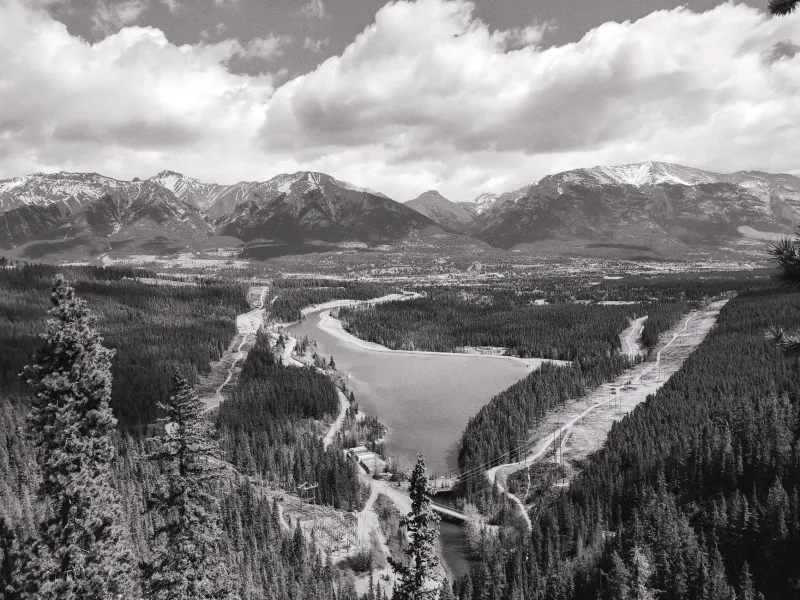
Pet recovery in and around the Bow Valley corridor is genuinely unique in Alberta. The combination of extreme terrain, active wildlife (bears, cougars, coyotes), and a transient tourist population creates a recovery environment unlike anywhere else in the province.
Pets that go missing in Canmore or the surrounding area often move upslope toward tree cover — a natural fear response that takes them away from populated areas quickly. The Trans-Canada Highway is a serious hazard. Recovery here benefits enormously from immediate contact with Parks Canada and Bow Valley Wildsmart, both of which maintain wildlife monitoring infrastructure that can incidentally capture sightings.
Searching With Geography in Mind
Understanding regional patterns doesn't mean abandoning your close-to-home search — it means layering smarter. Here's how to put geographic thinking into practice:
- Identify the nearest natural corridor. River valleys, ravines, coulees, and greenbelts are your first expansion zones.
- Think about cover, not distance. Frightened pets prioritize hiding over travelling. Dense vegetation, crawl spaces, and dark underpasses are high-value search spots.
- Post where people actually are. In urban areas, that's Facebook community groups and local off-leash parks. In rural areas, it's agricultural networks and local co-ops.
- Alert animal control in adjacent municipalities. Pets don't respect city limits. If you're near a boundary, file reports in both jurisdictions.
- Use Alberta Lost Pet Locator's regional alert tools to push sightings and notices to the people closest to your search zone — because the neighbour three streets over, or the farmer five kilometres down the road, might already have the information you need.
Geography isn't destiny. Pets come home from difficult terrain all the time. But knowing your landscape — really knowing it — gives every search a sharper edge.