Still, Silent, and Scared: Why Lost Pets Hide Instead of Coming Home
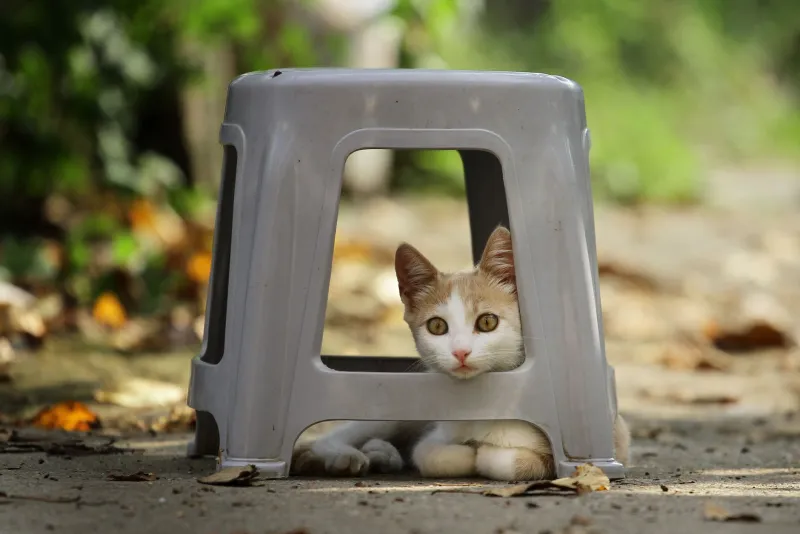
When a pet goes missing, the instinct for most owners is to picture them wandering — moving, visible, covering ground. You imagine them a few blocks over, maybe sniffing around someone's backyard or trotting along a familiar trail. It's a natural assumption. It's also, more often than not, wrong.
The reality is that the majority of lost pets — dogs and cats alike — aren't going anywhere. They're hiding. And the reason they're hiding has everything to do with how fear rewires an animal's brain in the moment everything goes sideways.
Fear Doesn't Move — It Freezes
Animals have three hardwired responses to a threat: fight, flight, or freeze. For most domestic pets caught off guard — a sudden thunderstorm, a gate that blew open, a car backfire during a walk — the response that kicks in isn't a long run. It's a panicked sprint followed by finding the darkest, quietest, most enclosed space possible.
Veterinary behaviourists refer to this as the "shutdown" phase. Once a pet reaches what their nervous system registers as safety — under a porch, inside a culvert, tucked behind a dumpster — they stop moving. Their heart rate drops. They go quiet. And they stay there, sometimes for days.
This is especially common in cats, but it happens with dogs too, particularly those with anxious temperaments, limited socialization, or trauma histories. A dog that is outgoing and social in your living room can become completely unrecognizable in a fear state — refusing to come to strangers, backing away from well-meaning people, even ignoring their own name being called.
The "Friendly Dog" Fallacy
Here's something that surprises a lot of Alberta pet owners: a lost dog is not the same dog you know at home. Owners often say things like, "Oh, she'd never hide — she loves everyone," or "He'd come running if someone called him." Under normal circumstances, that might be true. But a fear response doesn't care about your dog's personality.
Dr. Karen Sueda, a board-certified veterinary behaviourist, has noted in her research that lost dogs in a fear state often behave more like feral animals than pets. They avoid eye contact, lower their bodies, and retreat from direct approaches — even from people they know. Chasing a frightened dog almost always makes things worse, driving them further away from home.
This is a hard truth for owners to sit with. But it's also incredibly useful information, because it completely changes how you should be searching.
What This Means for Your Search Strategy
If your pet is hiding rather than roaming, your search radius probably needs to shrink — not expand. Studies on lost pet recovery consistently show that most dogs are found within a mile of where they went missing, and cats within two or three blocks. The problem isn't distance. It's visibility.
Search small and search thoroughly. Check under decks, inside sheds, beneath parked vehicles, in dense shrubs, and behind fences. Bring a flashlight even during the day — reflective eyes give away hiding spots that are otherwise invisible.
Go out at night and early morning. A pet in shutdown mode is far more likely to move during quiet hours. Many Alberta families have found their cats or dogs by doing a slow, silent walk through the neighbourhood between midnight and 4 a.m., when traffic and noise are minimal.
Use scent, not sound. Instead of calling loudly — which can spook a frightened animal — leave worn clothing near your door or the spot where they escaped. Your scent is an anchor. Food can also draw them out, but it works best when placed and left alone rather than used as bait while you stand nearby.
Set a humane trap. For cats especially, a live trap baited with smelly food (tuna, sardines, or their regular wet food) placed near where they were last seen is one of the most effective recovery tools available. Many Alberta shelters and rescues will lend these out — it's worth calling around.
Real Stories from Closer to Home
In Red Deer, a family searched for their beagle for four days after he bolted during a neighbourhood fireworks display. They'd been driving the surrounding streets and posting on community boards, assuming he was on the move. A neighbour finally spotted him wedged under the crawlspace of a house two doors down — less than 150 metres from where he'd disappeared. He'd been there the entire time.
A similar story played out in St. Albert, where a cat went missing after a move to a new home. Her owner assumed she'd tried to find her way back to the old neighbourhood. After ten days and a borrowed live trap, the cat emerged from inside the insulation of the new home's garage wall — she'd never left the property at all.
These stories aren't exceptions. They're patterns.
Adjusting Your Expectations — and Your Methods
Understanding the psychology of a lost pet doesn't just help you find them faster. It helps you avoid the mistakes that make recovery harder. Chasing, loud calling, and large search parties can all push a frightened animal further into hiding or cause them to bolt into traffic.
Calm, methodical, and quiet is the approach that works. Think like a scared animal, not like a person trying to help one.
If your pet has gone missing in Alberta, register them with Alberta Lost Pet Locator right away — our community alerts reach local volunteers who know their neighbourhoods and can help with quiet, targeted searches. The sooner you get eyes on the ground, the better your chances of finding a pet who's been still, silent, and waiting for you to come to them.