One Missing Pet, a Whole Community Moves: The Ripple Effect of a Lost Animal in Alberta
It starts with a single post — usually a blurry photo, a name in all caps, and a phone number typed out in a hurry. Within hours, that one message can travel across dozens of neighbourhood groups, land in the inboxes of strangers three towns over, and set off a chain of events that nobody planned but somehow everyone seems prepared for.
Losing a pet is devastating. But what happens next — the way a community quietly assembles around a missing animal — is something that doesn't get talked about nearly enough.
The First Spark: How a Missing Pet Alert Spreads
The moment someone shares a lost pet post in Alberta, something almost automatic kicks in. Neighbours who've never spoken tag each other. People who moved away from the area still share the post because they remember the streets. Local Facebook groups that normally host garage sale listings and road closure complaints suddenly become something closer to a command centre.
This isn't an accident. Alberta communities — particularly in mid-sized cities like Red Deer, Lethbridge, and Grande Prairie, and in tight-knit rural townships — have built informal but surprisingly robust pet alert networks over time. A lot of that infrastructure lives on social media, but it also exists in the form of community noticeboards, school parent groups, and the kind of neighbour-to-neighbour texting chains that don't have official names but somehow always work.
Platforms like Alberta Lost Pet Locator help formalize that energy. When an alert gets posted to a centralized database, it doesn't just reach the original poster's circle — it reaches people who are actively watching for exactly this kind of information.
Strangers Become Searchers
One of the more surprising parts of the lost pet ripple effect is how quickly people who have no personal connection to the animal or its owner decide to get involved.
Maybe they're a dog owner themselves and can't imagine being on the other side of that situation. Maybe they saw the post while scrolling at midnight and couldn't shake it. Maybe they just happen to walk the same trail every morning and figure it costs nothing to keep an eye out.
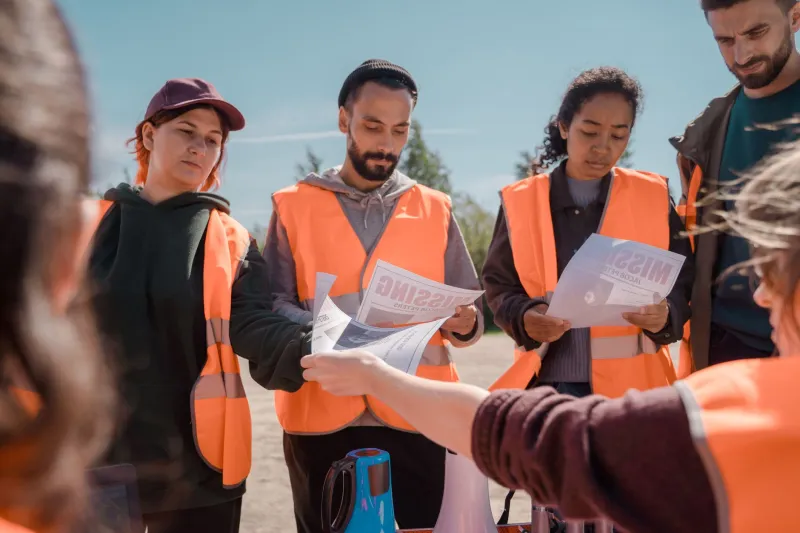
Whatever the reason, volunteers tend to show up. Not always with formal training or coordinated plans — but with genuine investment. People print flyers without being asked. They knock on doors in adjacent subdivisions. They circle back to check on a culvert or green space they noticed while driving to work.
In some cases, search efforts evolve into something more organized. Community members with experience in outdoor recreation or animal rescue sometimes step forward to help map search zones, suggest where a frightened animal might shelter, or advise on the difference between a pet that's actively running and one that's hunkered down in survival mode. That kind of local knowledge is invaluable — and it rarely comes from a hotline.
Why People Get So Invested
It's worth asking: why does a lost pet move people so deeply, even when it belongs to someone they've never met?
Part of the answer is empathy. Pet owners understand loss in a way that's hard to articulate. There's also something about the vulnerability of an animal — unable to ask for help, unable to explain where it came from — that triggers a very human instinct to protect.
But there's another layer here that's specific to Alberta communities. Many neighbourhoods in this province are in various stages of growth and transition. New subdivisions fill up with families who don't yet know their neighbours. Rural areas can feel isolating in the colder months. A missing pet becomes, oddly, a point of connection — a shared concern that cuts across the usual social boundaries.
People who find themselves searching for a stranger's cat or sharing a dog's photo to their entire contact list often describe it as one of the few times they've felt genuinely connected to the people around them. The pet is the reason, but the community is the result.
The Infrastructure Nobody Built on Purpose
What's remarkable about Alberta's lost pet recovery network is that most of it was never formally designed. It evolved through repetition — through hundreds of individual moments where someone shared a post, someone else shared it further, and eventually the right person saw it at the right time.
Over time, patterns emerged. Certain community members became known as go-to connectors — the people who always know which groups to post in, who to tag, which local rescue organizations might be able to help. Animal shelters in Edmonton and Calgary developed intake protocols that account for the volume of found animals reported through social channels. Rural municipalities started including pet recovery resources in their community newsletters.
Alberta Lost Pet Locator exists within this ecosystem — not as a replacement for community effort, but as a way to give it structure. Centralized alerts, searchable databases, and regional networking tools mean that the energy people are already willing to give has somewhere useful to go.
What Happens After the Reunion
Here's something that often gets overlooked: the ripple doesn't stop when the pet comes home.
People who participated in a search — even in a small way — tend to stay connected. They follow up on the post to see how it ended. They feel a genuine lift when the reunion photo gets shared. And many of them carry that experience forward. They're quicker to share the next alert. They're more likely to stop and check a lost-looking animal on the road. They've become, without any formal commitment, part of the recovery network.
This is how community capacity grows. Not through programs or campaigns, but through individual moments that leave people feeling like their attention mattered — because it did.
A lost pet is a hard thing. But it's also, in a way that most people don't expect, a reminder of how much people are willing to do for each other when given the chance.
If you're in the middle of that experience right now — posting, searching, hoping — know that you're not doing it alone. Alberta shows up for this. It always has.